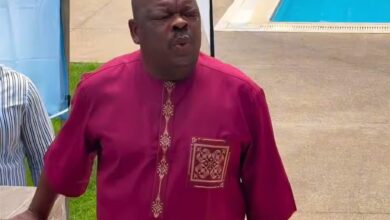
Ghana’s recent economic recovery is the result of deliberate reforms and superior economic management, not luck or external interventions, the Finance Minister, Dr Cassiel Ato Forson, has said.
Presenting the 2026 Mid-Year Budget Review in Parliament on Thursday, July 23, Dr Ato Forson said the economic crisis Ghana experienced in 2022 was caused by a combination of poor policy choices, including excessive borrowing, reckless spending and weak accountability.
He said when the John Mahama administration assumed office in January 2025, it inherited an economy facing severe challenges, including high inflation, currency depreciation, reduced investor confidence and limited access to international capital markets.
“Mr Speaker, when this administration took office in January 2025, President Mahama inherited an economy on its knees,” he said.
According to him, the crisis had serious consequences for businesses and households, with many Ghanaians losing purchasing power while some businesses closed or relocated.
Dr Ato Forson also referenced the impact of Ghana’s debt restructuring programme, saying domestic and external bondholders, financial institutions, individuals and pensioners suffered significant losses.
He said the experience should serve as a reminder of the need for responsible economic management.
“Ghana must never be brought below this low again,” he stated, adding that the country must safeguard macroeconomic stability and avoid repeating past mistakes.
The Finance Minister said the government took difficult but necessary decisions after assuming office to stabilise the economy and rebuild confidence.
He rejected suggestions that Ghana’s recent economic gains were simply due to the IMF programme or debt restructuring, insisting that the turnaround was driven by government’s policy choices and implementation.
“Our recovery is as a result of superior economic management,” Dr Ato Forson said.
He explained that while debt restructuring created fiscal space and the IMF programme provided a framework, neither could replace disciplined implementation, sound policies and strong leadership.
According to him, the government’s recovery strategy has been anchored on three major reforms: fiscal correction, modernisation of the tax system and complementary fiscal policies aimed at controlling inflation and stabilising the exchange rate.
He said these measures had improved public financial management, strengthened revenue mobilisation, reduced fiscal risks and restored confidence in the economy.
Dr Ato Forson added that fiscal reforms had helped reduce primary expenditure from 18.7 percent of GDP in 2024 to 13.2 percent in 2025, while improving the primary balance from a deficit of 2.9 percent of GDP to a surplus of 2.5 percent.
He said the improvements demonstrated government’s commitment to fiscal discipline and placing the economy on a sustainable path.