Silent Roads, Silenced Lives: Assin Fosu’s Growing Okada Crisis
By; Ras Kunta,Assin Fosu, Bantama

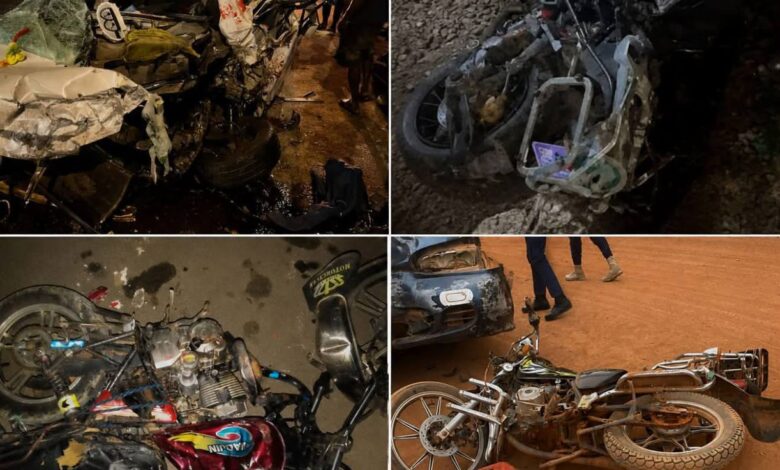
A growing sense of concern is emerging in Assin Fosu over the increasing number of fatal motorcycle accidents involving commercial motorbikes, popularly known as “okada,” with residents calling for urgent and coordinated action to prevent further loss of life.
Almost every few months, another accident involving a motorcycle adds to a disturbing pattern. Behind every crash statistic is a young life lost, a family thrown into mourning and a community forced to confront the same questions about road safety, enforcement and the growing use of motorcycles for commercial transportation.
In March 2026, two people reportedly died while another was hospitalised after two motorbikes collided near Finest Pub in Assin Fosu.
In July 2024, 20-year-old Mark Agbey also lost his life while reportedly attempting to overtake a taxi near the Assin Fosu Station.
Another victim was a young professional teacher popularly known as “Jersey Nyame,” who taught at Fosu Methodist School and was an alumnus of the Fosu College of Education. He reportedly died in a motorbike-related accident on the eve of Ghana’s match against Panama at the FIFA World Cup.
On August 23, 2026, tragedy struck again when a young Immigration officer and a friend reportedly lost their lives in an accident around Zongo Junction.
The incidents, residents say, are no longer isolated tragedies but part of a worrying pattern that demands closer attention from authorities, traditional leaders, transport operators and the wider community.
A livelihood born out of economic necessity
For many young people in Assin Fosu and surrounding communities, commercial motorcycle riding is not simply a choice but a means of survival.
With limited formal employment opportunities, motorcycles have become an accessible way for some young people to earn a daily income and support themselves and their families.
A young man with access to a motorcycle can begin transporting passengers without the relatively high capital required to establish a conventional business. The speed and convenience of motorcycles have also made them attractive to passengers seeking to reach their destinations quickly.
But the same factors that make okada attractive can also make it dangerous when safety regulations are ignored.
Some residents have raised concerns about riders allegedly operating without appropriate licences, registration, adequate training or protective equipment.
There are also concerns about speeding, dangerous overtaking, carrying passengers at excessive speeds and riding at night on poorly lit roads.
When speed becomes a matter of life and death
Motorcycles provide little protection to riders and passengers when compared with cars and other enclosed vehicles.
A collision that might result in minor injuries to someone inside a vehicle can have devastating consequences for a motorcyclist or passenger.
The danger can become even greater when riders travel at high speeds, overtake recklessly or operate on roads with potholes, inadequate lighting and other hazards.
For passengers, the situation is particularly difficult because many have little control over how a rider operates the motorcycle once they have boarded.
Some passengers may prioritise reaching their destination quickly without asking whether the rider has the required licence, whether the motorcycle is properly registered or whether appropriate protective equipment is being used.
The human cost behind the statistics
The consequences of motorcycle crashes extend far beyond the accident scene.
When a young breadwinner dies, a family can suddenly lose its main source of income.
Parents may be left struggling with medical bills and funeral expenses. Children can lose a parent. Spouses can lose partners. Friends and colleagues are left mourning people who may have had decades of productive life ahead of them.
For Assin Fosu, the repeated loss of young people also carries a wider social and economic cost.
These are people who could have become teachers, entrepreneurs, professionals, farmers, artisans and community leaders.
Every preventable death therefore represents not only a personal tragedy but also a loss of human potential.
Where are the louder voices?
What has frustrated some residents is the perceived gap between the scale of these tragedies and the level of sustained public response.
Traditional rulers, political representatives, community leaders and government institutions have considerable influence within the municipality.
They have demonstrated that they can mobilise residents around important community issues, including sanitation, development and public events.
Residents therefore want to see similar energy directed towards road safety and the recurring loss of lives through motorcycle crashes.
The concern is not necessarily about preventing young people from earning a living through motorcycle transport.
Rather, residents want a system where young people can earn a living without unnecessarily putting their own lives and those of passengers at risk.
Traditional authorities, assembly members, religious leaders, youth organisations and transport unions could all play a role in creating a sustained road-safety campaign.
Enforcement cannot wait for another funeral
Police warnings after accidents are important, but residents say prevention must begin before the crash.
Authorities could intensify checks on motorcycle registration, rider licences, helmet use and compliance with traffic regulations.
There could also be targeted education programmes for commercial riders, particularly young riders, on speed management, overtaking, passenger safety and night riding.
The Municipal Assembly and road safety authorities could work together to identify accident-prone locations and examine whether poor lighting, road conditions, signage or other infrastructure problems are contributing to crashes.
A sustained engagement with motorcycle riders themselves would also be important.
Riders should not simply be treated as offenders. They should be included in the solution.
Their experiences can help authorities identify dangerous locations, common road hazards and the economic pressures that sometimes encourage risky behaviour.
Passengers also have a responsibility
Road safety is not solely the responsibility of riders and government agencies.
Passengers also have a role to play.
Choosing a rider who appears qualified, insisting on helmet use and refusing to encourage dangerous speeding can help reduce risks.
Passengers should also feel empowered to reject rides from riders who appear reckless or improperly equipped.
A culture in which speed is celebrated while safety is treated as an inconvenience must change.
What should happen next?
Residents and stakeholders could consider a coordinated road-safety programme for Assin Fosu involving the Municipal Assembly, Ghana Police Service, National Road Safety Authority, traditional authorities, motorcycle rider groups, transport operators, health facilities and community organisations.
Such a programme could include:
Regular motorcycle registration and licensing checks.
Stronger enforcement of helmet use for riders and passengers.
Road-safety education targeted specifically at commercial motorcyclists.
Identification and monitoring of accident-prone locations.
Improved street lighting around busy junctions and roads.
Enforcement against speeding and dangerous overtaking.
Community education for passengers.
Engagement with motorcycle riders on practical safety challenges.
Improved emergency response and referral systems for crash victims.
Collection and publication of reliable local accident data to help authorities identify trends.
The role of the Municipal Assembly
The Assin Fosu area cannot address the problem through enforcement alone.
The Municipal Assembly has an important role to play in coordinating stakeholders and ensuring that road-safety concerns are incorporated into local development planning.
[8/25/2026 7:45 PM] Kofi Tutu: Dangerous junctions, poorly lit areas and road sections where accidents occur repeatedly should be identified and assessed.
Where infrastructure contributes to the danger, residents expect the relevant authorities to work towards practical solutions.
The Assembly can also facilitate public education programmes in schools, markets, transport stations and communities to ensure that road safety becomes a continuous conversation rather than something discussed only after a fatal crash.
The role of traditional authorities
Traditional authorities also have a powerful platform from which to influence behaviour.
Chiefs and community leaders command significant respect and can use traditional gatherings, durbars and community meetings to speak directly to young riders and passengers.
A united campaign led by traditional leaders, religious bodies, youth groups and transport operators could help make road safety a community responsibility.
The issue should not be politicised.
Whether a person rides an okada, travels as a passenger, drives a car or walks along the roadside, everyone has a stake in safer roads.
From condolences to prevention
The people of Assin Fosu should not have to wait for another young person to die before the conversation begins again.
Every accident should trigger more than condolences. It should trigger questions.
What caused the crash?
Was the rider properly licensed?
Was the motorcycle registered?
Was excessive speed involved?
Was the road adequately lit?
Was the location already known to be dangerous?
Could the accident have been prevented?
Those questions should inform policy, enforcement and community action.
Assin Fosu’s young people are not merely statistics in police reports or names announced after accidents. They are sons and daughters, teachers, workers, entrepreneurs, friends and future leaders.
Their lives deserve more than post-accident warnings.
The municipality now faces a choice: continue responding to motorcycle deaths one tragedy at a time, or bring together the institutions and community leaders with the power to confront the problem before another family receives devastating news.
The recurring crashes should be treated as a warning that something needs to change.
The time for another warning after another crash is running out.
Assin Fosu needs action on road safety — not only words after another funeral.