Veteran journalist and Pan-Africanist Kwesi Pratt Jnr has challenged African leaders and young people to rethink the continent’s approach to development, arguing that Africa cannot achieve genuine progress by simply copying economic models from the West.
He said the continent’s development must instead be built around collective self-reliance, control of its natural resources and stronger political and economic integration among African countries.
Speaking at the International Youth Forum, “Africa’s Freedom Is In Our Hands,” at the ISSER Conference Hall of the University of Ghana, Legon, Mr Pratt said Africa had to move beyond seeking solutions from the same systems that had historically benefited from its resources.

“We have gathered here today not to complain. We have gathered here today not to beg, not to plead,” he said.
“We have gathered here today to fight, to struggle for what belongs to us.”
His comments formed part of a wider debate at the September 5 forum on Africa’s economic independence, debt, reparations and the need for young Africans to take greater responsibility for the continent’s future.
The forum, held under the theme “Reclaiming Africa’s Wealth, Resisting Neocolonial Bondage,” resulted in the adoption of the Legon Declaration, titled “Africa’s Freedom Is In Our Hands.”
For Pratt, the question of development cannot be separated from the history of exploitation that left Africa supplying raw materials while other parts of the world built industries and wealth from them.
He questioned why African countries should aspire to reproduce the development experience of countries such as Germany, Britain and the United States without first examining how those economies accumulated their wealth.
“How can we become like Germany, Britain, the United States of America, and so on? How did they develop?” he asked.
He argued that Africa possesses sufficient natural resources to support its own development if those resources are controlled and used in the interests of African people.
“The only option open to the African people is the struggle to seize our resources and exploit these resources in our own interest and for our benefit,” he said.
“The only option open to the African people is collective self-reliance.”
From words to action
The youth declaration adopted at the forum echoed several of Pratt’s concerns, but went further by outlining actions participants said they intended to pursue.
Young people from Ghana, Mali, Burkina Faso, Niger and other parts of Africa called for greater economic sovereignty and a united youth movement capable of challenging what they described as continuing forms of neocolonial domination.

They demanded an audit and cancellation of what they described as illegitimate African debts and rejected the idea that the current generation should inherit obligations it did not create.
“We are the generation that inherited a debt we did not create. We refuse that inheritance. We reclaim our future,” the declaration stated.
The youth also took a strong position against the CFA franc, describing it as an obstacle to monetary sovereignty.
“The CFA Franc is not a currency of convenience. It is a leash,” they stated.
The declaration further expressed solidarity with the Alliance of Sahel States, comprising Mali, Burkina Faso and Niger, while calling for stronger links between young people across the continent and the African Diaspora.
The participants said the objective was not merely to produce another political document but to build a movement around the issues raised.
They proposed peaceful demonstrations, flashmob actions, public campaigns and lawful challenges to policies they consider harmful to African interests.
They also called for the creation of a united youth network and encouraged participants to take the message from the Accra gathering to their campuses, communities and countries.
Pratt’s argument for self-reliance also extended to political integration.
He advocated a united Africa capable of making collective decisions on strategic issues, including defence and monetary policy.
“A united Africa with one army, with one central bank. A united Africa which acts together,” he said.
The position reflects the long-standing Pan-African vision associated with Ghana’s first President, Dr Kwame Nkrumah, whose advocacy for continental unity was rooted in the belief that political independence without economic integration would leave African states vulnerable to external influence.
Pratt also referred to the struggle for reparations, cautioning that victory should not be measured only by financial compensation or the return of African artefacts held in foreign museums.
He argued that the ultimate objective should be a fundamental transformation of the international system and greater control of Africa’s economic destiny.
“We will not count our victory by the checks which are issued from the metropolitan countries for a few dollars, pounds and euros,” he said.
“Our victory will come when we reset this world.”
The call for action at the Legon forum builds on a wider Pan-African process that has been developing in Accra.
The Pan African Progressive Front has been involved in efforts to bring together progressive organisations from across Africa and the Diaspora around questions of reparations, economic sovereignty and African unity.
The organisation established its international headquarters in Accra in June 2025 and subsequently convened an international conference at the Kwame Nkrumah Memorial Park in November 2025 to mark the 80th anniversary of the Fifth Pan-African Congress.
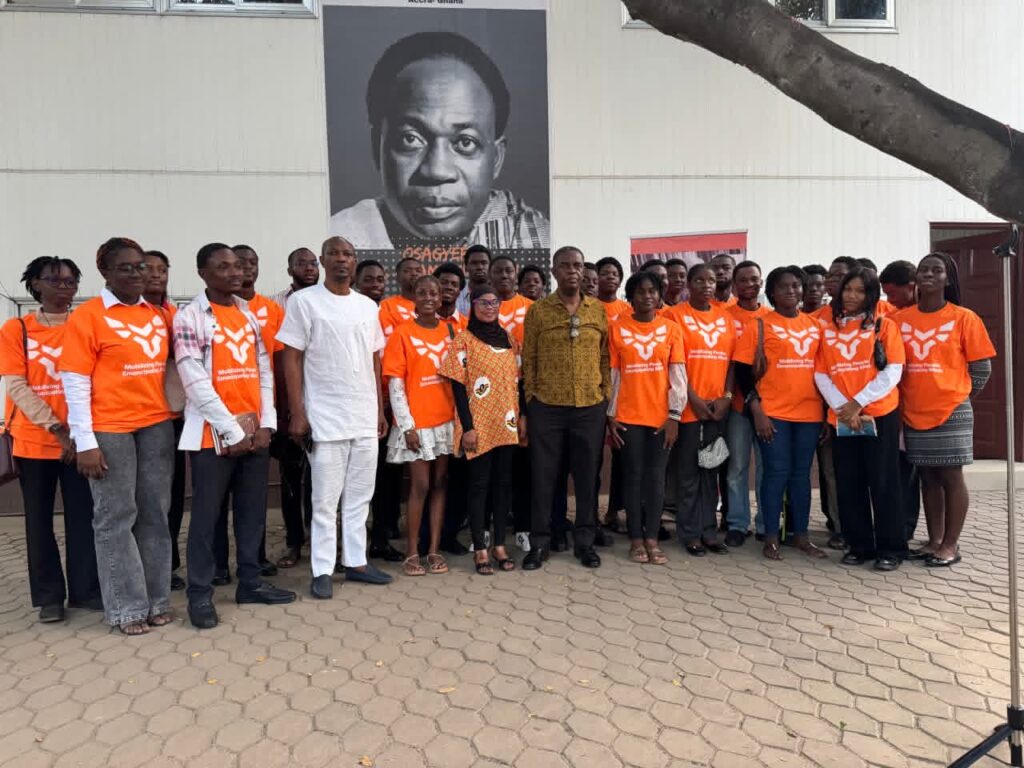
That conference brought together more than 200 delegates from 57 countries and produced the Accra Declaration and a Special Accra Declaration on Reparations.
The PPF has also proposed a Joint Institute for the Assessment of Damage and Documentation of the Colonial Legacy, as well as a Pan-African Reparations Justice Fund.
The latest youth forum therefore represents an attempt to give younger Africans a more direct role in that broader Pan-African campaign.
The challenge, however, is whether the Legon Declaration can move beyond a statement of grievances and become a sustained programme of action.
For the young participants, the answer lies in organisation.
They have pledged to build networks, educate other young Africans, mobilise peacefully and hold governments and institutions accountable.
As the declaration put it, the participants left Accra carrying more than a document.
They left with what they described as a resolve to ensure that the Africa they inherited would not be the same continent they hand over to future generations.