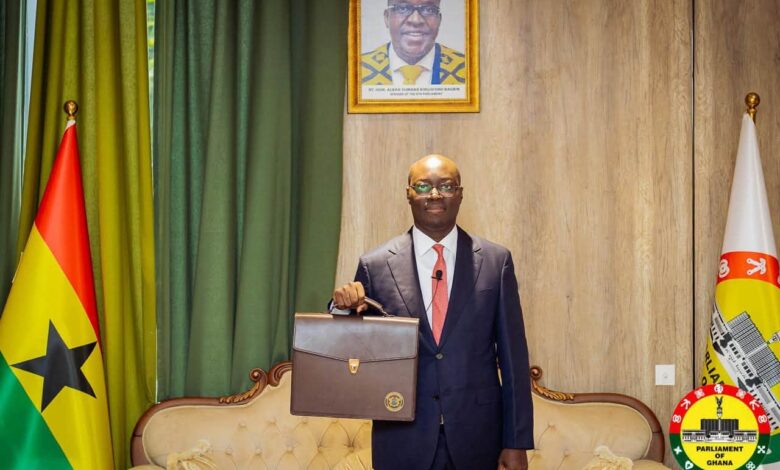
Ghana has achieved its statutory debt-to-GDP target of 45 percent years ahead of schedule, Finance Minister Dr Cassiel Ato Forson has announced, citing improved fiscal management and a sharp decline in the country’s debt burden.
Presenting the 2026 Mid-Year Budget Review in Parliament on Thursday, July 23, Dr Forson said Ghana’s debt-to-GDP ratio had fallen from 61.8 percent at the end of 2024 to 44.7 percent by the end of 2025, before reaching 45 percent in June 2026.
“Ghana has therefore already achieved its statutory debt target of 45 percent of GDP, years ahead of both IMF programme timeline and the targeted date established under the Public Financial Management Act,” he said.
The Finance Minister said the reduction reflected government’s commitment to fiscal discipline and had strengthened the country’s financial position.
“Prudent fiscal management has also translated into a rapid decline in Ghana’s public debt,” Dr Forson told Parliament.
The improvement comes as Ghana continues implementing reforms under its economic recovery programme with the International Monetary Fund, which has focused on restoring debt sustainability, improving public finances and rebuilding investor confidence.
Dr Forson also announced a significant reduction in the share of government revenue used for debt servicing, saying debt service as a proportion of domestic revenue had fallen sharply from 55.7 percent in 2022 to 28.8 percent in 2025.
“This has freed up billions of cedis for schools, hospitals, roads and other national priorities,” he said.
The Finance Minister further disclosed that Ghana’s primary balance recorded a surplus of 2.5 percent of GDP on a commitment basis by the end of 2025, while the country had achieved a 0.9 percent surplus by the end of June 2026.
He said government remained on course to meet its end-year target of a 1.5 percent primary surplus.
The improvement in debt indicators has also been accompanied by a change in Ghana’s debt risk assessment, with Dr Forson stating that the country’s external and overall risk of debt distress had improved from “high” to “moderate” for the first time since April 2014.
“Mr Speaker, for the first time since April 2014, Ghana’s external and overall risk of debt distress has improved from high to moderate,” he said.
The announcement marks a key milestone in Ghana’s efforts to restore debt sustainability after a severe economic crisis that triggered a domestic debt restructuring exercise and an IMF-supported recovery programme.
Government has maintained that the decline in debt levels will create more fiscal space for development spending, while critics have urged caution, arguing that maintaining debt sustainability will require sustained fiscal discipline and stronger economic growth.